Thang Nguyen 555

Cultures on Collision Course

  • Collective or collaborative

    Last week, Facebook lost a lot of money. Yet, none of us has lost any friend.  Well, except  here and there a friend from high school passed away. Yet while alive, we seek scapegoat: if only they hadn’t been here, we would have had more jobs, better paying jobs etc… Baby boomers experimented with collectivism, Millennial with collaboration. From We to Me and back to We, this time with platforms like Facebook and Twitter, not the VW van and “flowers in their hair”.

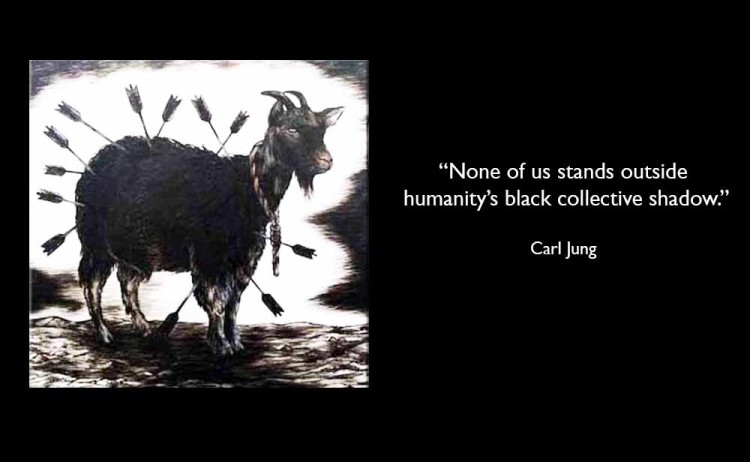
    Back to the land, back to billions for farmers to solve short-term problems – avoidable ones. The fireman/arsonist with black shadow – per Carl Jung.

    We are easily fooled: from being a fast-food nation to becoming fast-judging country. Deport them all, cut the chain (migration), re-shoring the in-shoring technologists etc.. Well, we are globally connected, and the dictator will face his own dilemma. Egypt tried it. Many countries have experimented with strong-handedness only to wear themselves out with policies’ unintended consequences. Not when facebook is still free, not when Amazon still delivers and not when Microsoft still operates (this last company has earned high marks on my book when employees signed petition to challenge ICE’s contracts).

    The Genie is out of the bottle. No turning back. New world demands new ways. Don’t renege on providing spare parts (exporting cars , for instance, and then high-ball the maintenance afterwards). Bad for the brand, bad blood all around.

    We have to pay the bills that come due.  As far as social contract goes, we can get away only for so long. Infrastructure crumbled, human resources depleted while Moore’s Law keeps up. What happened to that six-degrees of separation? Are we all just six acquaintances away from Donald Trump and Putin? All things must pass. Up to you and I to make our marks, our decisions and our legacy.  What would be engraved on that last stone, underneath our names. Loving father? Unsung hero? Taker and joker? Narcissist? Chief Blaming Officer – CBO? Our collective shadow stretches real long and wide. Don’t be surprised that it takes fewer than 6 degrees of separation once we headed down the road of blame.

  • I must be crazy and you crazier to touch on these subjects in today’s environment. In today’s environment, one must talk apps, talk data, talk of the town: anti-aging not anti-war, and anti-immigrant not anti-growth.

    Charlie Wilson of GM once answered a congressional inquiry this way, ” what good for GM is good for the country”. In other words, we are inter-linked on a floating planet. In a blink of an eye, things that once were, could no longer be.

    Post-war rebuilt was a result of  paying forward: Japan and Europe are strong today thanks to US tax payers who chipped in. Selective memory aside, people back then acted out of conscience and compassion: conscience that took a stand, and compassion that lent a hand.

    Fast forward to today’s digital environment, with surround sound and artificial intelligence, we forgot that once upon a time, in America, existed bootleggers, dirty cops and politicians, union bosses and mafia bosses.

    America is a beauty parlor that bleaches people of colors who came in late. Instead of ICE, we should have ice-cream to greet kids who cross the borders. Send in the clown. Re-ignite that dormant conscience and deeply fatigued compassion. Make it once again, in America, the land that I love, where people would risk their lives and livelihood to come and build new ones.

    I drove by Hope, Arkansas last week. A man used to live there, in a house facing the railroad tracks. Out of a seemingly hopeless town rose a leader of the free world.

    If Bill of Hope can make it, so can you and I. So can those new immigrants and infants. Together we shall overcome, any adversity and any obstacle. Pain ain’t hurt. Separation does. If not for conscience or social contract, then have compassion. May His Mercy endure forever.


  • Those unaccompanied minors

    Summer 1975. Double-digit inflation. Unemployment at 17%. Pennsylvania was just getting out of the Arab embargo, and America out of Vietnam. Imagine people tossing babies over barbed wires at the US embassy, or the chaos that ensued when thousands of people scrambling on those river barges or helicopters. The airport was rendered useless, hence Operation Frequent Wind. Kids got left behind. Kids simply got lost. Kids got killed (an orphan-only flight crashed and exploded on the runway).

    Yet we want to make similar mistakes again. Putting them up in now vacated Harvey shelter ( a converted Walmart?).

    Microsoft folks took a stand: “we want to see what computer could do, but we also want to see what computer should do” in referring to “boycotting” ICE lucrative contract.

    Democrats want to diversify while Republican just want to consolidate and stick together (families). But this issue of separating minors from their parents/guardians – albeit legal or non-legal – causes uproar and upheaval. It’s borderline on civil war.

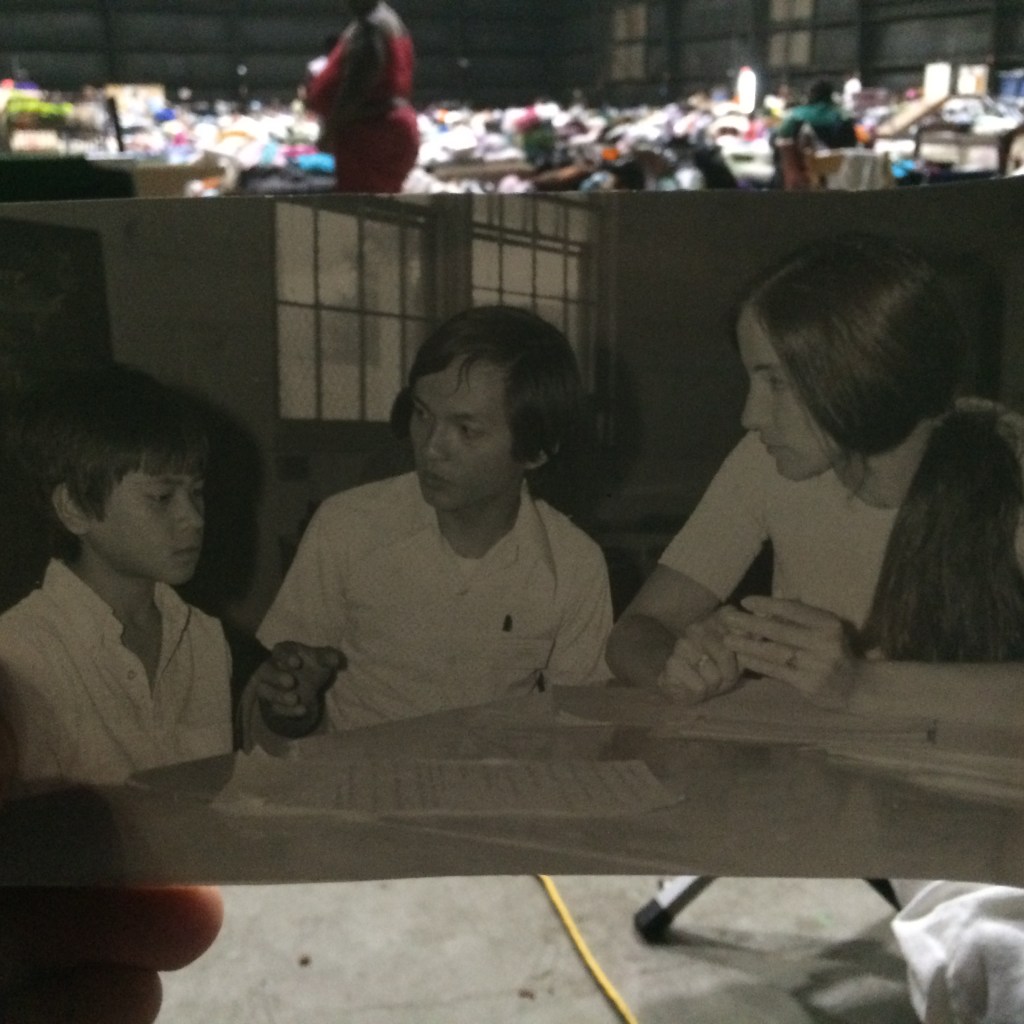
    I was a refugee/evacuee many times over. Two years ago, I stayed in the flood shelter (above pic).

    And years ago, on my first week in America, I already volunteered to be an interpreter for then Bureau of Child Welfare. I got paid one time accompanying those kids to Harrisburg court (where the judge would ask each one if they consent to be adopted by suitable families). The rest of the time, I learned on the job – assuring them that where they were going would be better than here-now. Yet the here-and-now was soothing, culturally. At least, they were still surrounded by barrack-mates of the same “feathers”. Sort of getting drafted into the company of Captain Hawkeye. Many couples decided to get married in a hurry.

    Our Child Welfare staff were good people, typing away documents on Remington type writers and processing children into receptive homes as quickly as possible. That was, once the kids, the court, and the caseworkers were all doing their jobs. My contribution was minor, but I gave my all, since they all knew I kept wearing the same outfit to work every day.

    That $35 check from Harrisburg was my first earning ever as a Court Interpreter.  I spent it all in one place: a cassette recorder and Sony blank tapes.  At night, in our refugee barrack, we would record music from home, for fear we would never had melody for memory.

    Coming from a high-context culture to be dispersed into a low-context one, must be quite a shock. In all the rhetoric surrounding migrant minors getting separated at the borders, no one has mentioned loss, shock and long-term repercussion. Everything seemed to be processed through a Western prism: efficiency, law/order, departmental stove-pipes, boycotting and blaming (political correctness – much the same as when President Ford said – aw…sh..t, I am going around Congress on this one and take it directly to the American people, in this case, Voluntary Agencies and non-profit charities).

    What about the children? Don’t they need no education, Pink Floyd? No one dares to work on the Emotional damage and ensuing tolls. We were outraged at Boko Haram for abducting bride-child. We were sorry for the Japanese and Jewish concentration camps. Yet we can with a straight face tell the world that those children are well-treated at a tender age.

    You tell me. Child Welfare or child abuse? BTW, the case worker in the photo, her name was Mary Ann Pinsky. I remember someone’s name more than 4 decades later because that person was decent, kind and concerned beyond her job duty. People in that Bureau of Child Welfare at Indian Town Gap should all be given commendation for their dedication and decency. Qualities that are hard to find and replicate in today’s tweeting world.

  • This morning, I learned that five more had died in a chase at the would-be Trump wall.

    The other day, in 100-degrees heat, I saw a homeless lady standing under a tree wearing everything she had on her. They could all be my mother back in 1975, when she was left behind in a PA refugee camp all by herself. Only that it was September cold, in a military barrack. Meanwhile, all three of us, sons and daughter (with 4 of her kids) got sponsored away into the four winds: divided and defeated. We were in a hurry to unburden ourselves from the Federal system, after three previous stops: Subic Bay, Wake Island and then Camp Indian Town Gap.

    I understand separation well. Especially when it comes to family separation.

    And mostly, when it is separation due to immigration.

    I was 19. Debut as janitor by night, freshman by day. Yet I still cried my heart out. For being so helpless. For self-recrimination and for survivor’s guilt.  We could not defend South VN. We could not hold our families together ( refugee sponsorships were voluntary, not a Congressional or Executive Order). And I could not work myself up to fill my first grocery card on my $150 government one-time allowance while my mom, retired teacher and fellow escapee, being left behind in the camp without any hope of resettlement (reminds me of team picking, when the opposite captain decides who to be on his/her team: survival of the seemingly fittest). When in graduate school, I was quite motivated to be among the first few to fly back and help fellow Boat People in their plight and resettlement process.

    I still held dear to my mom’s discharge paper, dated a few months after all of us had been relocated into neighboring North Eastern  States. Despite the now “happy ending”, our refugee tale has never been told in detail. We “‘bragged” on facebook about my sister’s 80th birthday, with bleached-teeth kids – but not dark tales, model minorities but not about betrayal and skin-shedding, very much like David Lynch’s Twin Peaks ( rack-focus shot from a perfect middle-class green lawn, but once revealed- full of insects and bugs underneath).

    My Dad joined us a decade later (1985) while my Mom got picked up after much deliberation by a Jewish D.C. lawyer consortium to reunite with my sister and her family.

    I meanwhile worked my way through each Student Union bathroom (where Bruce Springsteen once made a stop to grace us with “Born to run”) at night, and each course reading assignment by day. The campus Jesus freaks figured me for an easy sale, dialectically worked their rehearsed pitch about heaven-hell, Yes-No proposition on how to get to heaven stair-less-ly . To date,  no Christian friends ever asked and learned about my hidden secret: I brave myself enough to ask for my name be put in a separate file, with my newly issued Social Security, so I wouldn’t be a burden to our band of nine, 4 of whom children. Self-separation was painful, gut-wrenching and necessary for survival.

    I was that immigrant child that had been “forced” to come of age in a hurry, to re-learn what it means to be human in a world that got tired of giving out spare change. I was initiated into the world of work from the ground up: to wipe others’ toilets waiting for my ship to come. That tale involved voluntary/forced separation (only a few hundred millions appropriated for the evacuation of thousands), while being together would depend on sheer determination and decency in a post-Vietnam society already weighed down after a decade of war and division. I cut my family ties to move on from “Kent State” to Penn State, to find my own voice and my own identidy. The youngest and weakest link would wipe away involuntary tears to become a man of hope and helping hands. I did not know at the time what was awaiting me in Happy Valley, but I know now that I would not be silent when others are going to step into the same deep hole.

    “hey, that’s not right!”.

    Separation of families always brings horror, and togetherness hope.

    Together>separated.


  • For my Father

    “when you got nothing, you got nothing to lose” Bob Dylan

    I was 9 i.e. first bike and first romance.
    Not everything was rosy now that I look back to that time. The neighborhood bully destroyed my innocence if not for my father’s swift intervention.

    We called him “Cu Lon” (to this day, I still do not know his real name) to differentiate him from another of the same name “Cu Nho”. Cu Lon (Big Dick) fittingly was son of a Colonel who lived in a two-stories house – Army-issued Jeep parked out front. Cu Nho, on the other hand, was son of a male mobile nurse. It’s not Small Dick that this story is about. It’s Big Dick’s and Big Daddy’s.

    Cu Lon was used to getting his way: a slick motorbike, the best girl – my first love – and plenty of brand cigarettes. He hung out with the right crowd, older guys. Cu Lon, in short, was a poster child, ripe to show off his derivative power: richer, stronger and in the know.

    Despite his grander in size and status , we fought on one of the unavoidable occasions . The trigger I can not now recall. I remembered I stood my ground and kept standing back up after repeatedly got beaten up, and told to stay down. He wanted submission, wanted me to be broken.

    Before anyone knew what happened, I ran into the house – in a trance – and back I came out with a machete. (drama happened in that serpentine alley almost hourly, if not daily). It must have been a divine intervention. My Dad happened to be back from work and was locking up his bike when he saw his youngest in blood, sweat and tears.

    Vietnam was hot, people hungry and tired. After 1954 the country had been partitioned at the 17th parallel, much like Korea today, having to build a refugee life in the slum of Ban Co, then Saigon.

    At least 20 kids formed a mob that followed us to the Colonel’s house, situated at the end of the alley. No one wanted to miss the show. My Dad with chain in one hand and me on the other, while I was still holding my weapon of personal defense.

    Together we marched in front of the eager crowd. You should have seen the lay-out of this neighborhood, whose entrance opened up with two long winding tombs. On occasion, my cousin who lived next to the tombs would show movies from work, turning the open space into an outdoor cinema – my childhood Cinema Paradiso (Netflix night), transforming a dark alley into a dreamscape.

    Back to the century’s confrontation.

    With unmatched intensity, my Dad demanded to see the Colonel. RIGHT NOW! The Army’s driver/gatekeeper hurried back to fetch his boss who was strapping his Colt 45 over his T-shirt to receive us, an unwanted and unannounced throng. Meanwhile I was scared out of my wit, seeing the situation escalated way out of hand.

    Yet justice demanded this. And my father played the anti-hero in this real-life drama.
    He said in unmistaken tone to a slightly intimidated and flabbergasted Colonel:


    “Your son is bigger yet he beat my son bloody-nose. From here on out, when this happens again, I will give the same sh** right back in your face so you know how my son feels”.

    Not a pin drop. The crowd fell silent. If someone were to light a match, the high-octane atmosphere would have exploded.

    Indeed, what transpired after that flew by like a thin veil. All I knew was, from then on out, at times, when Cu Lon and I spotted each other, he still threatened me with his clenched fist, but only from a safe distance. Remote bullying. No further physical fights had ever broken out between us. He simply couldn’t afford the consequences: dragging the two hot-blooded bulls into a lock-horn.

    My father, a discharged Artillery man, must have meant every word (and body language) that day.

    At last, we had some peace during war-time.

    I was crying throughout the incident. Tears of rage, of having to live an underdog life (Northern refugees were not quite accepted and integrated throughout my childhood) in a shabby slum well-known for its trash dump and ill-exposed tombs. Worst of all, of not having running water (I had to hook up a long running hose between my cousin’s house and mine every other day to get our subsistence and get all dirty).

    My rage also ran deep because I had to pick up broken pieces of porcelain from the floor, every time my parents had an argument over meals. (It wasn’t illegal for men in Vietnam before that time to practice polygamy, as long as you can afford it.) Somehow, overtime, this madness has turned into melody, and my guitar my guard. That world was closing fast on us, like the pace of the Northern advancing army stepping on the fallen geographic dominoes.

    The US 34th Congress was much slower. When finally acted, it voted against a needed aid package to the South Vietnam Army (among whom was the Colonel, the alley bully’s father in this story).
    Despite my father’s shortcomings, I looked up to him and did all I could for him, from giving him a back rub over siesta to shinning his shoes (he turned out to be salesman/collector for VN Airlines).

    Time heals everything, and turns rage into rhythm, misery miracle, terror-father protector father. Years later, when I came back to visit the old neighborhood, I couldn’t help noticing it has shrunk (people expanded their balcony to the max, creating an almost enclosed dome). I asked about Cu Lon and learned he had died of an overdose cutting short his privileged life, while my father out-survived the neighborhood bully (his heart gave on a Winchester night. He was 94).

    My father and I wanted to beat the odds. Against the dysfunctional genes, dysfunctional families and society (including war). For me, it’s an adrenaline surge each time I recall this incident.

    My father always faced aggression with overwhelming response (he threw a knife that hit the door frame during the night to scare away a neighborhood thief). Once for all.

    Thanks to him, my life’s trajectory was deflected and redirected from its downward spiral (kids were drafted, deformed and died). I grew up draft-deferred like “private Ryan” with family members already in the service. Humanity wants to preserve its “seed” for future reproduction. This I did well.


    But don’t misperceive my penchant for people-pleasing: I wouldn’t guarantee how I might react when coming home from stressful sales work, seeing my child all bloody-nose with machete in hand.

    All I know was my father shined briefly that day and still lives on in me today.
  • It depends on how far you want to zoom out in space and time: men will look like ants

    (Apollo’s first photo of the Earth) and the rise of the Nazis , according to a far-right-party guy – will be viewed as a footnote in German history (his clothes were stolen while he was swimming in the lake yesterday).

    WE DON’T WANT TO FORGET!!! Not even amnesia can separate us from our long-term “footnotes”.

    Where I live, people double-name their streets: one, the usual, and second name – ethnic hero. In case the grandkids ask.

    1968- 2018   Fifty years. A  quick search will tell you that it started with a French student wanting to have a reciprocal right to visit an all-female dorm that triggered unrest in Paris.

    Meanwhile, the assassination of Martin Luther King and Robert Kennedy; the execution of  a Viet Cong insurgent on the street of Saigon; the high-octane Chicago Democratic Convention together made 68 a hot-boiled year.  “He ain’t heavy He is my brother” was a hit that year. Sitting out in the open, I looked up to my upper classmates band, who performed that song flawlessly. I knew then and I know now that I was witnessing history.

    After all, the war (Vietnam) brought out everything: the go-go bars and the body bags. I DON”T EVER WANT TO FORGET in case the grandkids ask.

    A lot has happened since: people moving in and out of my life, places I have passed by and moved on from…. everything I read and re-read, faces I failed to recognize.

    1968 was the year of growing up fast, faster than the drone noise of Operation Frequent Wind in 1975.

    Faster than the advancing “enemy”. Faster than I can say “Thank you President Ford”.

    But there were other villains I don’t want to forget either. Save that for another time.

    When you zoom out, really zooming out, the bad and the ugly both look like blips. Just blips. And goodness somehow shines on, despite the years and places in between. I remember an innocent line in “Saturday in the park” by Chicago ” a man selling ice-cream”. That’s what it’s all about: have an ice cream just like 50 years ago, last year and yesterday.

    Blip!


  • Young folks always assert themselves:  in the Graduate, plastics, in Santa Fe, TX,  the gun, and in Hanoi, the guitar ( Mai Khoi awarded recent International Prize in Oslo).

    It’s an unfair comparison to when I was growing up: a refugee kid repeating his parents’ script. But I know one thing – to use George Harrison’s catchy album title: “All things must pass” including : run the fingers, strike a chord, and mouth the lyrics ( in the hope to connect, to stir up and to move the room.)

    We, adults, have failed our kids badly: from being the Graduate to becoming the Mega-rich 1 percent-er, from getting rich with “plastics” to leaving behind an iceberg wrapped in plastics (National Geography’s cover picture), from missing their school play performances to missing tax deadlines.

    We are a generation of Someday. Someday we will make good and make right. Occasionally we reflect upon the Vinyl years, wishing it could have been or should have been. While Bill Gates was on the quest for the perfect Third-World toilet, Asian moguls sit on toilets made of pure gold. It’s not enough for evangelists to do their jobs over the airwaves, they now need to do it on the airplanes.

    Now comes the fun part: nobody gets hired anymore, but work flow still flows. We care about “what technology wants” more than “what the people want”.  Machine is learning, while man isn’t. (The best major now is Data Sciences). From Adam to Analytics, we have certainly made progress, giant leaps as a matter of fact: self-driving cars, self-healing network and self-cleaning buildings.

    Structures and institutions will remain, with new owners and new passwords. But influential people must heed the advice: pride comes before the fall. All things must pass, no option there. Fail not yourselves, your kids and your ideals. No should haves, could haves or Someday. Just now, next and the rest. Press reset. Breathe in/out and Think. The girl and the guitar got me thinking: where has myself gone?


  • With floods of data, it is not surprising that the number-one skill for living and thriving is how to curate information. Turning trash into treasure. Building our own filters, constructing our own “firewalls”. With the abundance of affordable chipset, people are hoarding images, video, audio and data way above their personal consumption level. Digital glut. At this exponential growth rate, video will be stacked up all the way to Mars in just a few years. Be discernible. Select your battle and be discriminative on how you dispense your meager attention. Start giving instead of just taking (Goodwill data site? Hey, you can read this e-book & watch this video on my dime).

    We are to be self-directed and not giving to the sway of public opinion: circle of friends, collection of likes and LinkedIn invites. “Walled-off” postings and homogenous connection lead to cultural insulation. Had the Internet existed around the same time as electricity, we wouldn’t have the American society as we now know. People would be talking in circles and among themselves (tribal groups).

    BTW, Best-Buy customer list was recently compromised. So it’s not just facebook that is in hot water. Years ago, it’s Target. Data companies now face their own “recalls”, just like Detroit companies with their faulty airbags.

    So, should we stay or should we go. Or do we have any choice living like a two-prong plug in a three-prong society, to paraphrase the late Andy Rooney.

    One thing for sure: we miss trusted faces that once were our curators on Morning talk shows, Evening News, and Late Night with so and so. That era has been long gone with no replacement in sight. We are orphans of our own making, with no authoritative figures as guideposts. Current “talking heads” floundered, took to battle-tweet with Parkland survivors ( hey, loser! you can’t even get admitted to Ivy League). Other networks are more apprehensive for fear of finding themselves in similar scandal. One wrong tweet can derail a media career.

    Perhaps great men in the past were more discreet or better skilled at partitioning their public vs private lives. Today, amidst all the news and noise, one small slip-up equals a giant step on the road of shame, humiliation without a possibility of parole.


  • I am almost done with ” In the Sanctuary of Outcasts” but I am in no hurry. It gives me pleasure to feel the pulse of America’s last “forbidden outpost”. As a society, we are just as good as our weakest link: veterans, homeless, shut-ins and bottom-feeders.  Neil White, inmate-turned-undercover-journalist, tried to give leprosy a new PR spin: he failed at the attempt to call this dreaded disease by any other name.

    This reminds me of a biblical story. A terminally-ill man by the healing pool. For 38 years, his repeated attempts failed miserably since other outcasts had always gotten in first.

    The fact that we long for a more civil society, a more just regime and a better place is proof that we are coded for an After-Life. At least that’s how the Augustinian argument goes: ” our souls are anchored in the Heavenly….hence we are restless….”

    I know restlessness well. I was born restless, with narrow shoulders (my mom was petite) – and big feet. By the time I finished French elementary in Saigon, the Vietnam war took a turn for the worst: the burning monk, the Diem brothers’ assassination, then Kennedys’ followed right after. Heck, the whole earth seemed to be scorching. Yet in the middle of self-immolation, Thich Quang Duc was still (I was standing across the intersection along with some eye-witnesses).

    He were like a pebble dropped into the lake, causing ripple effects except for the center. Later, after a limbo in Wake Island, summer 75, I dove right into post-war America, where I felt what Neil White was describing of his incarceration in Carville: he doesn’t belong, just makes believe that he went undercover as an inmate-journalist.

    From growing up with huge generational gap ( the other four adults were of WWI WWII generations respectively) to cultural gap in an almost all-white “cow college”, I too went through the motion, like a mail-order bride in foreign land, longing for my eventual home. Unfortunately, similar to the Healing Pool, every time I tried to jump in, others had already beaten me to it. So I ended up with tons of memories, lots of  sorrows and this narrative has yet to find its proper ending. Because of my interrupted life, I can make inference to others’ with deferred dreams: those who were drafted, drained and dejected like spent cases. Veterans of a chain of wars who are struggling with PTSD, drug-abuse, homelessness and frequent successions of VA chiefs.

    Later, as I compared notes with counter-parts of the counter-cultures, I realized many shared the “hobo” impulse (On the Road). It is an equivalent of pool-side chat among “the outcasts”, as Neil had observed “the out-of-tuned piano was once played by two lepers whose combined fingers could manage a composition written for players with full ten”. From the underside looking out, I realize we are all different, yet have one thing in common: the rich avoided us for fear of contamination. We are the weakest links.

    Yet, America can only be as strong as its last outpost and outcasts.


  • A school in PA got a creative idea: it stocks up on rocks to defend itself from school shooting. Traditionally, schools have ample supplies of papers and scissors. With rocks, it completes the Rock, Paper and Scissors set. Quite a sad state of affairs in public schools, whose walk-outs will stage a “March For Our Lives” tomorrow.

    I have had my shares of eye-witnessing the uprising VC’s getting hunted down on the rooftops (the year was 1968, and the event was Tet. The same timeframe and locale as the infamous execution shot that turned the corner for the Vietnam War).  School was out for weeks. When it was safe enough for Walter Cronkite to record his “stalemate” stand-up piece,  we were allowed to return. I remember wanting to go back to school so badly after weeks of  watching the repeat of B/W documentary on the massacre in Hue.

    I empathize with Parkland and Maryland students in their stages of grief: survivor guilt then paranoid (what if I am not as lucky to make it out alive the next time around). Later on in life, I found the cure for those nagging fears: by lending a hand to others, I am no longer pre-occupied by guilt and fears.

    Today’s youngsters take on a different calling: they mobilize using mobile phones. It seemed as if the Arab-Spring adrenaline finally flowed back and flushed away fear and fatalism. I wish them well, forever young. Those forced times away from school taught me more than while I was inside the classroom: I was fast-forwarded into adulthood, into pre-maturity and  reflection about what it meant to be human, what values are worthy and how do we go about spreading peace, honor and goodwill.

    Rock, paper, scissors. My childhood disappeared in a blink of an eye in Tet 68. To Parkland and Maryland students: don’t get swept away, but at the same time, you may find yourself while losing it. I speak from an aching heart: my 16-year-old daughter is also in school in FL. I find myself overwhelmed when reflecting on what I went through when growing-up in comparison. May positive changes come soon for her generation’s benefits.