Strong in broken places

I see strength in broken places every day. In people peddling lottery tickets, in pedicab drivers, in xe-om and  conical-hat ladies.

They move about under the shadow of high rises here in Saigon.

Broken limb and broken dream.

Yet I see strength in their struggle.

I see resilience where there should have none.

Death is in no special hurry, writes Hemingway.

A farewell to arms. An invitation to plowshares.

Cultivate and enculturate, learn and love.

I see students pairing up and partnering up.

I see students strive for and take ownership of their future, here and abroad.

Even an eagle needs a push.

Raise the standard (academic) and quality.

Raise the bar and the price. No pain no gain.

Like their African-American counterparts in the US, young Vietnamese are discovering their USP (Unique Selling point): Vietnam Got Talent, soccer,

and fashion (design).

In between 2000 and 2012, I have seen gradual changes: from bicycles to motorbikes, from motorbikes to Vespas, from Vespas to V6 .

Upward mobile.

Skyscrapers that reach out to the heaven.

Soar.

Touch the face of God.

Show and prove to the world that you exist and make a difference.

Wipe those tears from the children’s eyes. Lift your face to the rising sun and pray that God would have mercy .

Reincarnate or resurrected, active voice or passive voice, just find your voice.

Colonial days and imperial days are over. After darkness comes day light.

The storm that swept through Saigon last week was more than symbolic.

It cleansed the city of impurity and inertia. Now, with a cleaner slate to start over, I expect to see the next phase of growth, of optimism and confidence.

After all, I live here now. My city. When it does well, it rubs off on me as well.

Strong in broken places. Even death is in no special hurry. So why should I.
Eventually

“If people bring so much courage to this world the world has to kill them to break them, so of course it kills them. The world breaks every one and afterward many are strong at broken places. But those that will not break it kills. It kills the very good and the very brave impartially. If you are none of these you can be sure it will kill you too but there will be no special hurry” p.249 A Farewell to Arms by Ernest Hemingway.

Hemingway was lucid about war and the tolls it exacts at a personal level. We are in a hurry, but death isn’t. We could have been dead at birth.  Why be in a hurry?

I closed the book feeling so empty. Especially when it ends with THE END in caps.

Is this how my world and yours will end? IN CAPS? in the rain?

Why are we still hurting each other? To what end?

Greed has no end. I know that.

Jealousy as well.

But goodness and kindness ? Are they in short supply?

If we weren’t around at all – what opportunities have we lost? gained? missed?

Life saga doesn’t just happen in movies. It happens in real life. Another day at work, another child is born into this pain-filled world. A funeral (a good sight, since it marks THE END of a hopefully good life).

What about hope?

Have we lost the ability to dream?

Fire, Ready, Aim.,

I love the Romantics yet I ended up being a Realist.

Many of my age already turned cynical.

I haven’t heard joy and laughter from people of my age for a while.

What happened to those baby-faces? Lost innocence?

Don’t cave in.

It will get you eventually. Hence buying for time. Enjoy the ride.

Be not in any special hurry!

Inching back to life

When we face a critical juncture on the road, we need to be decisive.

A liberal arts training doesn’t hurt either. Even when two people arrived at the same conclusion, liberal art thinkers insist that between A and B, a straight line might not be the best alternative.

Just the shortest.

As nature would agree, it favors the fittest, not the fastest among us.

We are having a leadership crisis. Our Job Czar, himself the best job outsourcer, says on 60 Minutes “I work for the shareholders” when asked about CSR (Corporate social/civic responsibilities).  Those shareholders might be Saudi sovereign funds, or  Chinese who couldn’t wait to get their hands on the secret sauce of GE aircraft engines).

The seamstresses and the toy makers who saved, end up owning the aircraft makers who overspent.

Remember, the problem of a declining America doesn’t happen overnight.

It is a confluence of factors, none of which favors the American work force (the missing middle class).

It would be easy if it had been a series of  A/B forced choices. I look at Steve Jobs timeline, and notice a parallel between his life and America’s:

starting from 1976 when he built his personal computer in a garage to the latest I-phone roll out.

At roughly the same time, America hosted Deng’s visit to Texas  and ordered a bunch of toys (remember Mattel then, Foxconn).

The rest as they say, is history: restless children play at stationary desktops, while dumb adults tinker with smart phones.

Light-weight, high-yield processors have upended America’s growth trajectory which began with heavy industries ( 50’s American autos are still popular in Cuba).

This shift doesn’t just level the playing field. It erases the whole map (employees carrying personal smart phones to work, hence, increases both personal and corporate productivity).

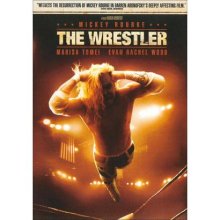
Now we have to crawl back to life, like in the Wrestler: feeling the rope and relying on muscle memories.

We need to inch back to life with new digital instincts. We need to be the fittest again before resigning ourselves to fateful and final acceptance of defeat.

I never know an America that is fatalistic. In its short history of warfare, its people always take up arms when challenged. In that spirit, let’s reverse course, inch by inch, back to health. It might have been a step back, but who knows, this will end up with two steps forward.

Success always rewards itself with more. It just that we haven’t tasted it lately to remember how intoxicating it once was and can still be.

The larger-than-life generation

Tom Brokaw‘s coined it “The Greatest Generation” those who preceded the Boomer Gen.

This weekend we remember many who fought those huge battles.

The way they carried themselves: smoking, shooting and even kissing in the streets of New York (celebrating victory).

Subsequent G.I. Bill made possible their going to college (many were into

engineering and management, having been exposed to the world beyond their immediate borders and compelled by much needed infra-structure projects). They weren’t the “Deer Hunters” of the later war.

Instead, they hit the books and started families, despite Post Traumatic Disorder Syndrome.

I was born later, but the previous generation seemed to have left some trails, very gentlemanly ones.

People tilted their hats, held the door, and smiled at neighbors.

I used to shine shoes for my dad, prepared his coffee and watched him interact with peers.

(I remembered seeing titles by Somerset Maugham, Saint Exupery and Ernest Hemingway around the house.)

They way he carried himself, the romantic incline and how he responded to crisis (w/courage).

Those were the times. I even secretly wished I had grown up much faster then.

Maybe deep down, I knew those happy times would be short-lived.

And true to form, history pulled a quick dialectic turn on me: I was tossed into the seas (literally) to stake out my life and time.

I “imagined” (all the people, living for today) while my hair grew longer than generation, before or after.

My counterparts in the US fled to Sweden and Canada,

while my upper classmates to Australia, US and France.

The Greatest Generation secured an industrial base strong enough to spill over to the next century.

Just try to have breakfast at one of those 50’s diners, and you will get feel for what it was like back then: sturdy counter,

pleasant hostess and  full breakfast. Hate to say, but it was manly. Just like their days in war.

In French, it would be “le jour le plus longue”, whistling and marching to their destiny with bravery and grandeur.

Propaganda discounted, I would say, they staked  out their places in history by living, fighting and rebuilding a society worthy of men.

We are all inheritors of their war-rebuilding efforts, and the least we can do is to salute and keep our shoes shined. Oh, and don’t forget to hold the door.