I love

Our own Duc Huy has sung “Toi yeu…nhung loi noi thanh that, toi yeu ly ca-phe buoi sang” (I love sincere comments, .. morning cup of coffee). So do I. Especially when it’s cappuccino prepared with care and passion by our UVT Hospitality students. They even brought it up to my office (perk!).

I love “the dog says Good-night” in Wonderful World by Louis Armstrong.

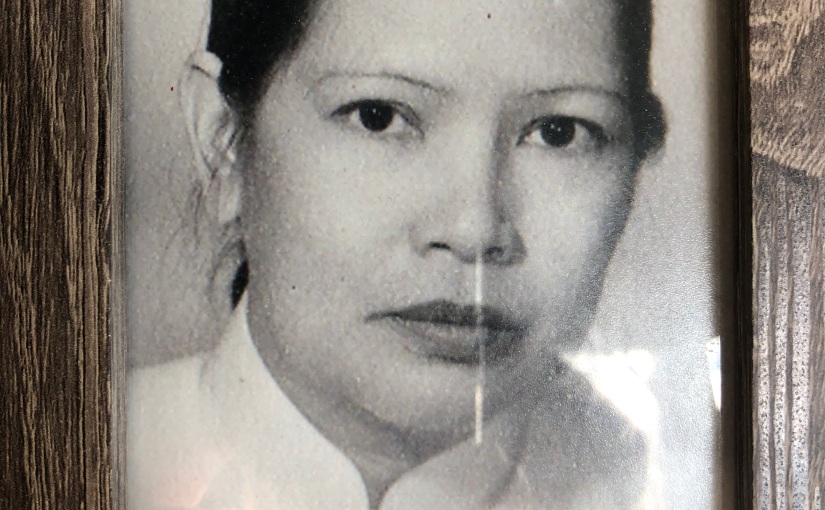
I love Shubert whom my Dad adored. I love “Ao Dai” my mom used to wear.

I love Good Morning Vietnam with the aerial shot of the chopper leaving the lush-green rice field.

I love little children with innocent eyes, arms wide-spread in front of mom’s Vespa (thinking it’s they who “fly” the vehicles).

I love the man- on the balcony across the alley- who squats and spreads his arms as if he were a Master of ancient martial arts.

I love Au Marche (Cho Hoa Hung) with “le poisson glisse” (fish that glow in the sun ).

I love grandma types who think her savings would make a difference in the clan’s future.

I love Security Guards (in Vietnam, it’s big business) who know everything that happens in the company.

I love back-stage Rockers who can’t wait for their set.

I love Accountants and HR, who feel important and needed when others are hired and fired.

I love people, places and purposes.

Let’s do it.

It’s a wonderful world.

The coffee by the way is cappuccino.

Can you imagine if I had had something else this morning.

TGIF.

Recognize the face

Machine is getting smarter (facial recognition).

In “It might be youStephen Bishop sings about “if I found the  place, would I recognize the face“.

The face he has waited for all of his life.

Babies could hear before birth (the logic behind classical music during pregnancy).

Then psychologists theorize about us looking for that first trusted face (our mom’s or nurse’s).

I have talked to a bunch of xe-om (taxi scooter), who echoed the same theme: it’s hard to find “chan tinh”, real love.

Sounds hopeless to me.

But surrounded by young people on buses and on campus, I saw a different version: careful but calculated risk-taking.

Man-woman, man-man, woman-woman pairing.

If only we brought back Tootsie, “I became a better man to you by being a woman….”.

Men are built to conquer (biologically). Woman, nurturing.

They could make a perfect marketing team: cold-caller and customer relationship manager.

For now, we are at a juncture where men and women roles are being revised if not reversed.

Friedman’s Feminine Mystique needs its own 2.0 mobile version for Vietnam .

I don’t know about recognizing the face, but I sure have recognized the foods.

For the past three months, I have exacted my revenge.

Also, a good dose of music and arts (highly recommend the museum on Ly Tu Trong for arts and history and C’est Moi for live music).

During the course of my rediscovery (see Adventure in My Own Land), I stumbled upon “Cu Lao” where Nguyen Huu Canh founded South Vietnam.

Our own Columbus did not meet native Indian nor was he offered Turkeys for Thanksgiving.

But he might very well be.

We now have a city nearing ten million mostly young college students.

My job has taken me to different campuses, where I saw learners of all shades and stripes.

Part tech savvy, part social intelligence, these “faces” will be our future leaders.

Would I  recognize those faces, if I found the place.

I might. For some strange reasons, I feel closer to my now-deceased Mom by being here, than in the US.

Perhaps there are more faces like hers. Perhaps they put on Ao Dai (see Mom’s Ao Dai). I can’t figure it out yet.

But I guess I have found the place. That’s the easy part. The hard part is to recognize the face, as if facial recognition apps could help.

Papa’s shoes

When you karaoke in Vietnam, you are likely to hear Papa along with Hotel California and Casablanca.

Something ends with an “a”.

I have blogged about Mom’s Ao Dai. So to be fair, here is “Papa‘s shoes“.

At lunch, I was joined by a boy and his Dad (it’s common in Asia at peak hours to sit at the same table with complete strangers).

The attention that boy got from his Dad brought me to tears.

I had to turn away, pretending that red peppers were too hot for me.

Papa struggled all his life: French domination, migration to South Vietnam after the Paris Accord 54, and later, in 1985 to Virginia.

He was a flamboyant but family man at the same time.

Taller than most, he wore US large size. I shined his shoes after his siesta to send him on his “sales” route.

He was the only man still fought his turn at karaoke at the age of 80.

Most memorable was when I finally heard that I had passed the Baccalaureate exam (French lycee equivalent of SAT) in flying color, he pulled out his wallet for my friends and I to buy beer (we would have sneaked out to do it anyway). Rite of passage.

He stood up to defend us against robbers by night and bully by day.

And he got teary after I had suggested that he should take a trip to visit his other woman who was

still living in the old country (he was too old to make the trip out of the nursing home then).

Every kid I talked to whose dad had died during the war had similar regrets.

That every time they had a nice meal etc.. they wished they could share it with the old man.

That kid who joined me at my table had something precious going without realizing it.

His dad urged him for the third time to try a dish. I guessed he finally relented.

With every passing day, we are replaying the same old script: ignoring the moment to chase the shadow.

A line in Papa “…keep shoes on my feet” says it all.

Kids need shoes and their daddies.

To deny a worker his rightful way to earn a living is to deny another generation a shot at life.

Yes, my Dad lived the only life he had known how: machismo (punching out a cocky supervisor) and romantic (wallet with girl friends’ pictures) at the same time. His life reflected his time, often upheaval and fleeting.

He was younger in his larger extended family. He did what he could with the help of my mother (see Mom’s Ao Dai) to put shoes on our feet.

But in countries like Vietnam, a man is still viewed as a cedar, to fend off the enemy and dispense favors around.

I only look back to those warm moments e.g. beef noodles and book-browsing.

I hate it when parents try to put their kids in a jury box.

When they were both gone, kids, like me, are left with only half of each.

I guess that’s where selective memory comes in: when you viewed something or someone as favorable, you only see those traits that reinforce your preconception. In my tapestry and collage, I only saw my Dad’s shoes from a teen vantage point. And how large were his shirts and pants. For him, I did cry twice: one was cry-wolf when he slipped and fell down the stairs, rolling head-down  many turns yet emerged unharmed.

And the second time  was at his funeral. My parents are now resting in peace at the Serenity section in Alexandria cemetery. They had a rhythm of separation due to migration (war) and reunion. Both lived to be in their early 90’s.

Today, at lunch, it was about to be the third time. But I managed to hold back. I didn’t want that kid to see a complete stranger got all teary over a piece of hot pepper. Enjoy it kiddo, while the ride lasts.

Mom’s Ao Dai

When I saw a Vietnamese woman on motor bike with helmet, mask, sunglasses, messenger pouch, gloves and Ao-Dai steering scooter while holding a baby on her way to the sitter, it brought back memories of Mom’s dress.

She was a school teacher, deeply committed to her multiple roles: mother, teacher, wife, daughter-in-law and friend (to other teachers who had graduated from the same French Lycee, which in her time, was a big brag!).

Having spent her semi-orphan childhood in dormitory, she made sure we have what she had not: a loving home with home-cooked meals.

Not a good cook, she tried most times, without even taking off the Ao Dai she had on from work. By design or default, she had a good assistant: me. Here, hold the live chicken legs while I slit its throat (all the while, she would pray for its soul).

Then she would place the boiled chicken on the altar – an offering to our ancestors on the day leading up to the New Year (Tet).

I learned by observing and via osmosis (run to the market and get me ginger) and by cleaning.

And clean I did, on the cusp of New Year. Mom would put on her Ao Dai right before mid-night, light up three joss sticks and pray to the four corners of the Earth. There was something very sacred at New Year countdown: inspirational enough to my parents who often competed to compose and read aloud a stanza or two to each other (both were well-versed in French …Lamartine, Chopin and Flaubert etc..).

I meanwhile tried to finish up the last rinse for the floor in anticipation of throng of visitors.

Back then, you could hear occasional boom and bang (Chinese enclave was known to spend a fortune on firecrackers e.g. shades of pink and red – color of fortune, evident in spent shells which carpeted their lawn, our version of ticker tape parade).

The whole region threw a big New Year party that makes even the dead want to join.

Years later, Ao Dai evolved in style (Madame Nhu), hence rid of the collar.

But not for my mom.

She stayed on in that teacher’s style all the way to America, where once again, she trekked snowy roads to the Temple on New Year’s Day. I knew then and even now, she had prayed for me, her youngest who has never traveled traditional safe path.

In contrast, the Road Less Traveled took me far from the proverbial tree. The first few feet were the hardest, seeing her wave from my rearview mirror.

This made it hard the whole way to Chicago, to grad school and to an uprooted life.

Her picture has been on my altar. I wonder what gift I should buy to make it worthy a Tet offering (bean bun, bouquet and beer?) Banh chung, bong cuc va bia?

Perhaps the best way to honor and keep her memory is to be the best son/student.

I don’t want to see in the rearview mirror shadow of regrets. I realize the only way she could have let me go was for furthering education. Of any one in my family, she would be the one who understood it best.

When seeing a younger version of herself in scooter, mask, glasses and helmet, but still in Ao Dai, holding a baby on her way to the seaside babysitter, I was reminded of her: sacrificial and selfless, a role model with near spot free existence. Her contribution made my and our human family all the richer.

Si tu n’existais pas, I wouldn’t be here. As keeper of fine and fond memories.

Mom’s Ao Dai.

Unintended influence

We are influenced most by our 2nd or 3rd degree connections.

I grew up hearing stories of the past (almost 2 million people died in the 1945 famine and how my great Aunt took my mom and siblings in since she had a tea plantation etc… my Anne Frank version). Consequently, I strongly believe in Paying Forward (I wouldn’t have been born later in the South if it hadn’t been for  great Aunt Dieu, my vertical 2nd connection).

Taking that a notch further, we benefit greatly from the courage of the Wright brothers (who braced themselves for the Beta-test of those early airplanes) to the soon ubiquitous RFID technology (which reduces the costs of inventory and supply).

ARPANET gave us access to a vast amount of data on the Web. Storify and Spotify help us sort them .

I saw an ad yesterday which spanned from horse carriage, to internal combustion engine, to today’s hybrid Infinity.

Even failed technologies contributed to our collective repertoire. Or failed states and statesmen (women).

I read about the passing of Madame Nhu (Vietnam’s Imelda Marcos, minus the shoes collection).

http://www.nytimes.com/2011/04/27/world/asia/27nhu.html?partner=rss&emc=rss

She was on a PR/shopping trip on Rodeo Drive when her brother-in-law’s regime collapsed, rendering her stateless.

Her unintended influence was more in modernizing fashion than in abortion ban.

The Ao Dai (long dress) during her time came without the collar (her casual-Friday version). She must have taken a page book from Paris Match and Life  (Audrey Hepburn). This week, we won’t go anywhere without seeing those Spring dresses and hats, coming to us from London.

Ironically, as France banned the veil and head covers, Britain welcomes back the hats (might you the security camera angle. These society ladies don’t do ATM or violate stop lights.)

Back to our 2nd and 3rd degree influence.  What key words will land searchers on our page? Will future anthropologists – or Third Generation Viet-American, conduct digital forensics, the way they do in China upon discovering a 2,000 year-old Mummy, to find our “upload” an unintended influence?

I only know that small act of kindness to relatives and people in need, as happened once in my extended families, enabled our migration to south Vietnam (instead of being counted among the 2 million deaths). For my turn at unintended influence, I promise not to say things like “the monks are welcome to barbecue themselves” ( 1963 monk self-immolation to protest religious persecution).

It’s hard to earn a good byline these days. At least in one case, the NY congressman whose half-naked pic went viral, resigned immediately. Madame Nhu’s unintended influence, however, was to encourage Vietnamese women to “stick their necks out” during war-time. The same thing happened to American women during the two World Wars: replacing the men who left the factory for the front.